

Moving is one of the most material-intensive events in a person's life, and most of that material ends up in a landfill. The average household move generates hundreds of pounds of cardboard, plastic bubble wrap, styrofoam, and single-use tape that is used once and discarded. The good news: a growing range of eco-friendly packing alternatives can dramatically reduce the environmental footprint of your relocation without adding cost or complexity. Whether you are moving across town or across the country, these sustainable swaps make it easier to arrive at your new home with a cleaner conscience, and often a lighter moving bill.
Why Eco-Friendly Packing Matters for Your Move
Conventional packing materials, especially expanded polystyrene (styrofoam) and plastic bubble wrap, are petroleum-based, rarely accepted in curbside recycling programs, and take centuries to break down in a landfill. The U.S. moves approximately 35 million households each year, according to U.S. Census Bureau data, meaning the cumulative waste from packing alone is staggering.
Beyond individual impact, corporate relocation programs are increasingly scrutinizing the sustainability of every stage of an employee move. Sustainable global mobility strategies are no longer a niche concern they are becoming a core expectation for HR and mobility teams managing large volumes of relocations annually.
Switching to greener packing materials is one of the most immediate, tangible steps any mover can take and most alternatives are readily available, affordable, and just as protective as their conventional counterparts.
Eco-Friendly Packing Alternatives: A Room-by-Room Overview
The best sustainable approach is to substitute each conventional material with a like-for-like alternative that serves the same protective function. Below is a practical breakdown.
1. Replace Bubble Wrap with Paper and Cloth
Bubble wrap is convenient, but it is made from low-density polyethylene, a plastic that most recycling facilities cannot process. Strong alternatives include:
- Kraft paper and newsprint. Crumpled kraft paper or unprinted newsprint provides excellent cushioning for dishes, glassware, and artwork. Both are widely recyclable and compostable.
- Cloth wraps and linens. Towels, t-shirts, scarves, and cloth napkins you are already moving make ideal wrapping for fragile items. You pack two things in one no additional material required.
- Corrugated cardboard inserts. Cut strips of corrugated cardboard to line box edges or separate plates. It is recyclable, sturdy, and often available free from retail stores.
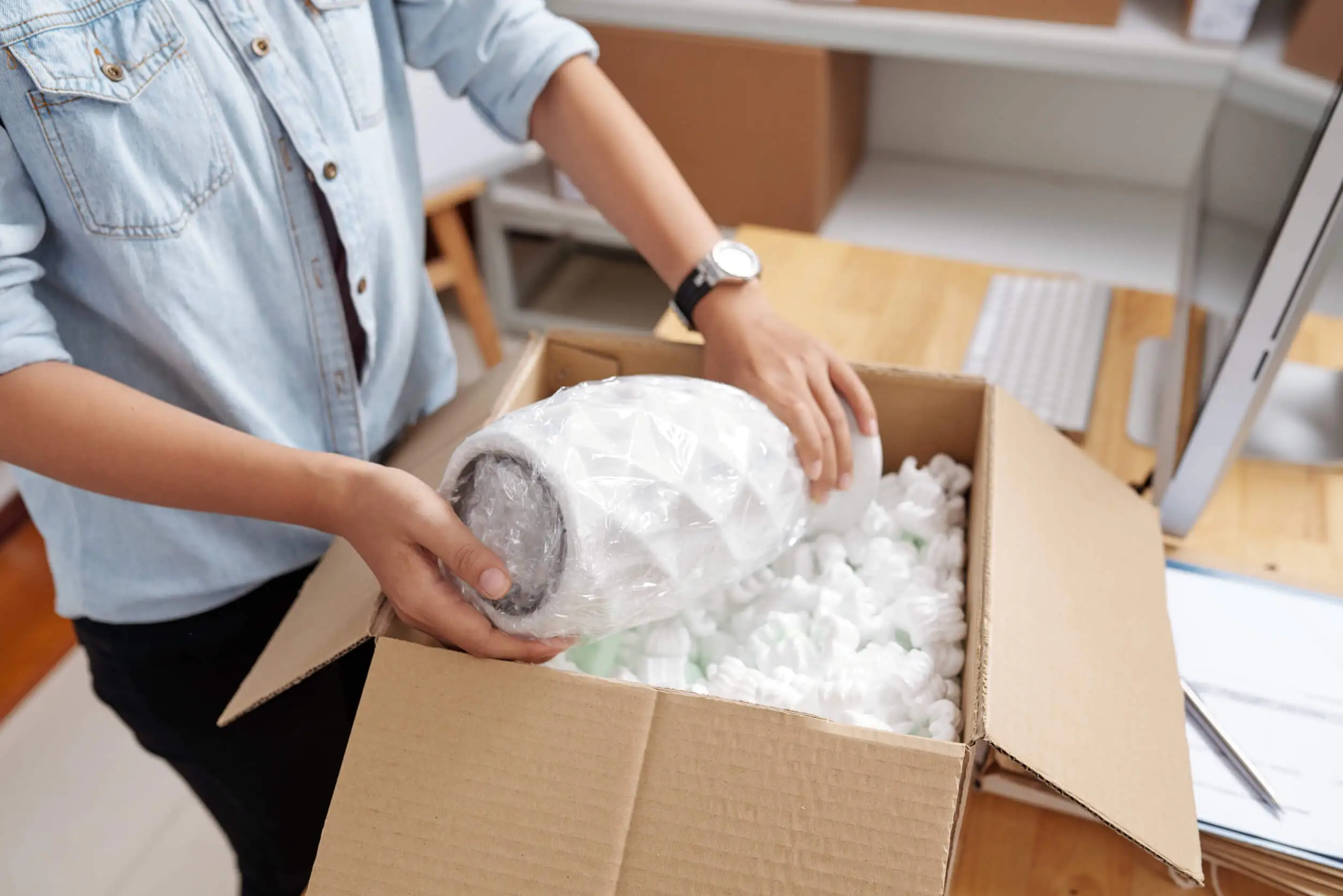
2. Swap Styrofoam Packing Peanuts for Plant-Based Alternatives
Traditional packing peanuts are polystyrene, essentially the same material as styrofoam coffee cups. Two greener replacements perform equally well:
- Starch-based packing peanuts. Made from cornstarch or wheat starch, these dissolve in water and are fully compostable. They look identical to the conventional version and protect fragile items just as effectively.
- Shredded paper and cardboard. A basic paper shredder turns junk mail and old documents into free, biodegradable fill material. This approach also handles pre-move document management in one step.

3. Source Recycled or Reusable Boxes
New corrugated cardboard boxes are made from a renewable resource and are highly recyclable, but sourcing boxes that have already been used once is even better. Practical options include:
- Grocery and liquor stores. These businesses receive large shipments daily and typically give away sturdy boxes for free. Liquor store boxes are especially good for glassware.
- Community boards and online platforms. Apps and local community groups frequently list free moving boxes from recent movers who want them repurposed rather than recycled.
- Reusable plastic crates. Several rental services offer heavy-duty plastic moving crates that are used hundreds of times before being retired. These eliminate cardboard entirely for one move cycle and are delivered and picked up by the provider.
If you do purchase new boxes, look for products made with a high percentage of recycled content most major moving supply retailers indicate this on the packaging.
4. Switch to Paper Packing Tape
Standard packing tape is made from polypropylene plastic, which contaminates cardboard recycling streams, meaning taped boxes often cannot be recycled even when the cardboard itself is clean. Paper packing tape, also called kraft tape or gummed tape, is a direct replacement that is fully compatible with cardboard recycling. It adheres strongly, is available in both water-activated and self-adhesive formats, and costs roughly the same as plastic tape.
5. Use Sustainable Labeling Practices
Conventional adhesive labels leave a plastic film that is difficult to remove and can compromise cardboard recyclability. Alternatives include:
- Writing directly on boxes with a permanent marker boxes labeled this way are still recyclable and can be relabeled for future use.
- Using paper masking tape and a marker for labels that peel off cleanly.
- Attaching string tags for items or crates you plan to return or reuse.
Reduce What You Move: The Most Sustainable Step of All
The greenest packing material is the one you never need. Moving fewer items means fewer boxes, less protective fill, less fuel burned in the moving truck, and lower overall cost. Before packing a single box, complete a deliberate declutter:
- Donate usable furniture, clothing, and housewares to local nonprofits.
- Sell items through community resale platforms to offset moving costs a strategy we cover in depth in our guide to how to save money on your next move.
- Responsibly recycle electronics, batteries, and hazardous materials through municipal collection programs rather than moving them to a new home you may not actually need them at.
Reducing volume also has a direct impact on your moving quote. Household goods transport is priced by weight and distance, so a leaner inventory translates to measurable savings.
Eco-Friendly Packing: Quick-Reference Comparison
| Conventional Material | Eco-Friendly Alternative | Recyclable / Compostable |
|---|---|---|
| Plastic bubble wrap | Kraft paper, cloth wraps, corrugated cardboard inserts | Yes |
| Styrofoam packing peanuts | Starch-based packing peanuts, shredded paper | Yes (compostable) |
| New corrugated boxes | Reused boxes, rental plastic crates | Yes / Reusable |
| Polypropylene packing tape | Paper (kraft) packing tape | Yes |
| Adhesive plastic labels | Permanent marker directly on box, paper masking tape | Yes |
| Styrofoam coolers (for perishables) | Insulated cardboard cooler liners, wool cooler bags | Yes / Reusable |
How Relocation Programs Can Integrate Sustainable Packing
For HR and mobility managers overseeing corporate relocations, sustainable packing is increasingly part of a broader environmental, social, and governance (ESG) commitment. WHR Global's EcoVadis Silver Sustainability Rating reflects the kind of vendor-level commitment that mobility programs should look for when evaluating their supply chain including which household goods carriers and packing suppliers they authorize.
Embedding sustainability requirements into your relocation policy such as requiring movers to offer recyclable packing materials or starch-based fill as the default option is a low-friction way to reduce program-wide waste. This aligns well with the broader movement toward sustainable mobility management that leading global mobility programs are actively pursuing.
For individual relocating employees, reviewing the full range of services available through SimpleMove® can help identify options that reduce both moving complexity and environmental impact from coordinating household goods shipments to accessing tools and checklists that streamline the packing process.
What to Do with Packing Materials After the Move
Even the best eco-friendly materials need a plan for after the boxes are unpacked. A few guidelines:
- Cardboard boxes: Break them flat and place them in your curbside recycling, or post them on a community board for another mover to reuse.
- Starch packing peanuts: Dissolve them in the sink, add them to a compost pile, or donate them to a local shipping supply store that accepts used packing materials.
- Paper fill and kraft wrapping: Add to curbside recycling or home compost.
- Rental plastic crates: The rental provider picks them up no disposal needed.
- Cloth wraps: Unpack your breakables, shake out the linens, and put them directly into the wash. They are already home.
For more practical advice on navigating every stage of a move, explore our article on 10 essential tips for a stress-free move including how to time your packing, coordinate movers, and avoid the most common moving-day pitfalls.
Frequently Asked Questions
Are eco-friendly packing materials as protective as conventional ones?
Yes, when used correctly. Starch-based packing peanuts, crumpled kraft paper, and cloth wraps all provide cushioning comparable to bubble wrap and styrofoam. The key is ensuring adequate fill so items cannot shift inside the box. For extremely fragile or high-value items, consider double-boxing an inner box cushioned with paper fill inside a larger outer box regardless of which material you choose.
Where can I find eco-friendly packing supplies?
Most major hardware and moving supply retailers stock paper tape and recycled-content cardboard boxes. Starch-based packing peanuts are widely available through online retailers and office supply stores. For reused boxes, check local community boards, grocery stores, liquor stores, and bookstores. Rental plastic crate services are available in most major metro areas search for "moving crate rental" in your city.
Do eco-friendly packing materials cost more?
Not significantly, and in many cases they cost less. Reused boxes are often free. Cloth wraps (your own linens) cost nothing. Paper tape is price-comparable to plastic tape. Starch packing peanuts may carry a slight premium over styrofoam, but the difference is minimal for a typical household move. Reducing your total move volume by donating or selling items before packing produces the largest cost savings of all.
Can I recycle cardboard boxes taped with paper (kraft) tape?
Yes. Paper packing tape is compatible with cardboard recycling streams, unlike plastic polypropylene tape. Most municipal recycling programs accept cardboard with paper tape attached, though it is always worth confirming your local program's guidelines. To be safe, you can remove large strips of tape before placing boxes in the recycling bin.
How should corporate relocation programs approach sustainable packing?
The most effective approach is to include sustainability requirements in your household goods carrier contracts and relocation policy. Specify that movers must offer recyclable or compostable packing materials as a default option. You can also include employee-facing guidance in your relocation handbook encouraging green packing practices. Professional employee relocation services through a managed RMC can help standardize these practices across your entire program.
Is it safe to move pets using eco-friendly packing methods?
Eco-friendly packing choices do not affect pet transport directly pets travel in carriers, not boxes. However, reducing exposure to chemical off-gassing from conventional plastic materials in a packed moving truck can be a secondary benefit for pets sensitive to synthetic materials. For a complete guide to moving with animals, see our article on how to move with pets without the chaos.
Start Your Green Move with SimpleMove®
A sustainable relocation starts long before moving day: it begins with choosing the right resources, tools, and partners. SimpleMove® is designed to give relocating individuals and families the guidance they need to move smarter, more efficiently, and with less waste. From coordinating services to accessing expert relocation resources, explore what SimpleMove® offers and take the first step toward a move that is better for you and for the environment.
For HR teams and mobility managers looking to build sustainability into a structured relocation program, WHR Global brings decades of experience managing employee relocations with an increasing focus on responsible, measurable practices. Contact SimpleMove® to learn how we can support your next move.